 Call Us : 08045811776Call Us : 08045811776

 Send Inquiry
Buttweld Fittings
MOQ : 50 Kilograms
Buttweld Fittings Specification
- Coating Type
- No coating (bare metal)
- Tolerance
- 0.5mm
- Tensile Strength
- 515 MPa (min)
- Bend Radius
- 1D, 1.5D, 2D as per standard
- Sealing Type
- Metal to Metal
- Temperature Range
- -20C to 800C
- Flexibility
- Rigid
- Diameter
- 1/2 inch to 48 inch
- Connection Type
- Buttweld
- Yield Strength
- 205 MPa (min)
- Product Type
- Buttweld Fittings
- Material
- Stainless Steel
- Connection
- Welded
- Shape
- Elbow, Tee, Reducer, Cap, Cross
- Standard
- ASTM A403, ASME B16.9, DIN 2605
- Surface Treatment
- Pickled, Passivated
- Outer Diameter
- 1/2 inch to 48 inch (21.3mm to 1219mm)
- Section Shape
- Round
- Length
- As per standard or customer requirement
- Thickness
- 3mm - 40mm
- Color
- Silver/Grey
- Usage
- Pipe Connection
- Rated Pressure
- Up to SCH160 / XXS
- Material Grade
- 304, 304L, 316, 316L, 321, 317L
- Application
- Oil & Gas Industry, Chemical Processing, Petrochemical, Power Plants, Water Treatment
- Marking
- Grade, Size, Heat No., Manufacturer
- Corrosion Resistance
- Excellent
- Finish Type
- Matte/Satin
- Packaging Type
- Wooden Case/Carton Box
- Non-magnetic
- Yes (for austenitic grades)
- Hardness
- 217 HB
- Heat Treatment
- Solution Annealed
- Production Technique
- Seamless or Welded
- End Connection
- Plain End/Bevelled End
- Leakage Test
- 100% Hydrostatic Tested
Buttweld Fittings Trade Information
- Minimum Order Quantity
- 50 Kilograms
- Supply Ability
- 50 Kilograms Per Week
- Delivery Time
- 1-2 Week
Buttweld Fittings About
Specification
- Size : 6 NB to 2400 NB
- Schedules : 5s, 10s, 40s, 80s, 10, 20, 40, STD, 60, 80, XS, 100, 120, 140, 160, XXS with NACE Certifications
- Types : Seamless, Welded & Fabricated
- Form : Seamless/Welded - Elbow, Tee, Cross, Reducer, Cap, Stubend, Barrel Nipple.
Superior Resistance to Corrosion
Engineered using premium stainless steel and surface-treated with pickling and passivation, these buttweld fittings deliver outstanding corrosion resistance even in harsh chemical or marine environments. This makes them ideal for industries such as oil & gas, chemical processing, and water treatment, extending service life and minimizing maintenance needs.
Precision Engineering and Rigorous Testing
Manufactured in compliance with ASTM A403, ASME B16.9, and DIN 2605 standards, these fittings ensure accuracy with a 0.5mm tolerance. Every fitting undergoes 100% hydrostatic testing to guarantee leak-proof performance, and solution annealing improves their durability under high temperatures, supporting safe operation up to 800C and pressures up to SCH160/XXS.
FAQ's of Buttweld Fittings:
Q: How are buttweld fittings tested for leakage and durability?
A: Buttweld fittings are subjected to a 100% hydrostatic leakage test to ensure they are free from leaks. The solution annealing heat treatment and strict adherence to mechanical properties like tensile strength of 515 MPa (min) and yield strength of 205 MPa (min) ensure reliable durability and long-term performance in challenging environments.Q: What are the primary benefits of using these stainless steel buttweld fittings?
A: The main benefits include excellent corrosion resistance, non-magnetic properties (for austenitic grades), high tensile and yield strength, leak-proof metal-to-metal sealing, and compatibility with a wide temperature and pressure range. These attributes provide dependable performance in critical applications and reduce the risk of failure.Q: When should I opt for solution annealed and pickled/passivated fittings?
A: Solution annealed fittings, which are always pickled and passivated, should be chosen when high corrosion resistance and optimal mechanical properties are required. This treatment restores the ductility and strength of the steel while ensuring the surface is free from impurities, making the fittings suitable for aggressive industrial settings.Q: Where can these buttweld fittings be used?
A: These fittings are widely used in the oil & gas industry, chemical and petrochemical processing plants, power generation facilities, and water treatment projects. Their excellent corrosion resistance and high mechanical strength make them suitable for harsh process conditions often encountered in these sectors.Q: What is the process for connecting these fittings to pipes?
A: These fittings have plain or bevelled ends and are designed for buttweld connections. The pipe and fitting are aligned and joined by welding around the circumference, creating a strong, permanent, and leak-proof joint. This process delivers high structural integrity and allows smooth fluid flow inside the pipework.Q: How is product traceability ensured for each fitting?
A: Every fitting is clearly marked with key information such as material grade, outer diameter, heat number, manufacturer, and size. This ensures full traceability from fabrication to installation, aiding in quality assurance and compliance with industry standards.
Tell us about your requirement

Price:
Quantity
Select Unit
- 50
- 100
- 200
- 250
- 500
- 1000+
Additional detail
Mobile number
Email

More Products in Butt Weld Pipe Fittings Category
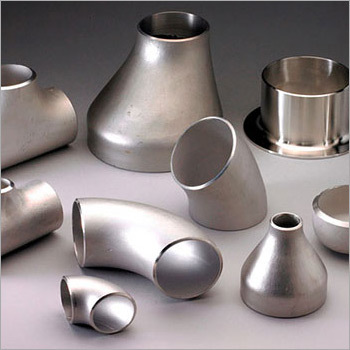
Monel Seamless Butt Weld Fittings
Price Range 200.00 - 800.00 INR / Kilograms
Minimum Order Quantity : 50 Kilograms
Tensile Strength : 480 MPa min (Monel 400)
Length : Custom/Standard Pipe Fitting Lengths
Connection : Other, Butt Weld
Color : Silver / Metallic Grey
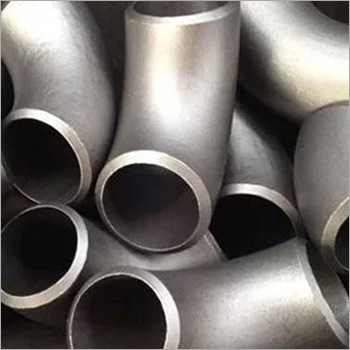
Nickel Alloy Buttweld fittings
Price Range 200.00 - 800.00 INR / Kilograms
Minimum Order Quantity : 50 Kilograms
Tensile Strength : Up to 550 MPa
Length : As per standard or customer requirement
Connection : Other, Welded
Color : Silver/Grey Metallic
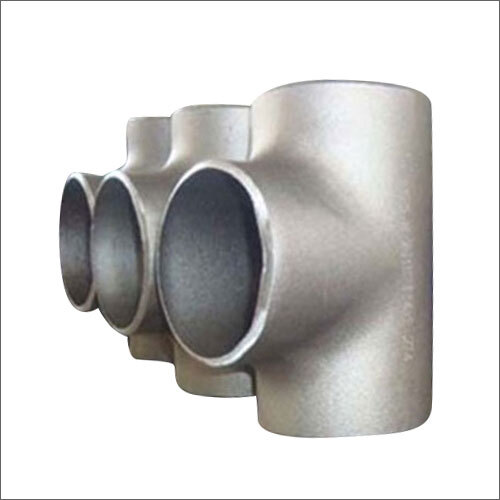
Super Duplex Buttweld Fittings
Minimum Order Quantity : 1000 Pieces
Tensile Strength : Min 800 MPa
Length : As per standard or client requirement
Connection : Other, Buttweld
Color : Metallic Silver
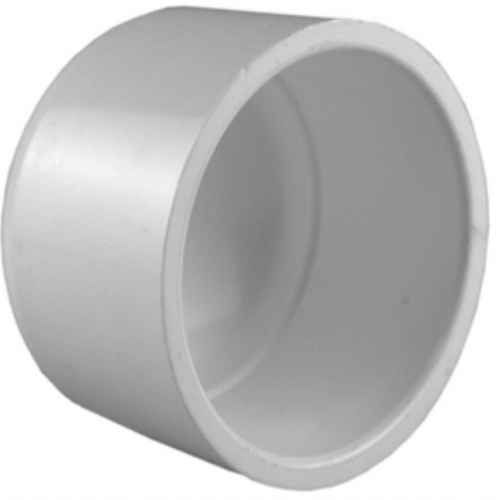
SS Pipe End Cap
Minimum Order Quantity : 1 Unit
Tensile Strength : 520 MPa (min)
Length : Customizable
Connection : Other, Welded
Color : Silver

Address
GST : 27AAGPK9639P1ZT
- Plot No. 367, S.V.P. Road, Shop No. 7, Minerva Mansion Co-op Hsg Society Ltd, Mumbai - 400004, Maharashtra, India
- Phone :08045811776
- Send Inquiry
 Send Inquiry
 Send Inquiry
 Send SMS
 |
DEEPAK STEEL (INDIA)
All Rights Reserved.(Terms of Use) Developed and Managed by Infocom Network Private Limited. |
